
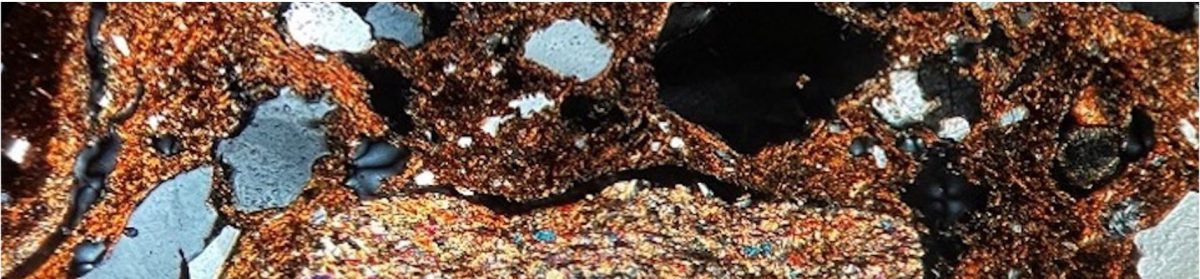
Petrographic analysis
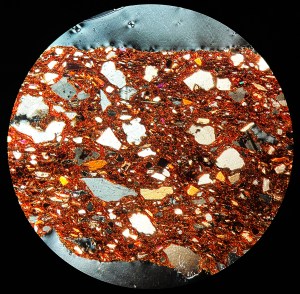
Petrographic analysis uses a polarizing microscope to evaluate the optical properties of rocks, minerals, and other geologic materials. When applied to material culture, petrography is a powerful technique for inferring provenance, composition, technology, temperature exposure, and quality. These types of data can be used to address a range of research topics, such as community organization, economic structure, exchange, and identity. Petrography can generate both quantitative (point count) and qualitative (fabric analysis) data that carry high analytical and interpretive value.
Pricing for petrography depends on the level of analysis (quantitative or qualitative) and sample size. All analyses are accompanied by a technical report that includes a description of results, graphs, and figures that can be used in crafting journal articles, conferences presentations, and reports.
Training and Workshops
Duke petrographic also offers training workshops for students and professionals. We tailor the depth and duration of the training or workshops based on client needs. We offer short introductory seminars to week-long, in-depth and hands on training,
Trainings can cover method, research design, scopes of work, and applications for petrographic analysis on materials like brick, pottery, concrete, daub, and more.
Pottery analysis
The analysis of vessel form and function can be eminently valuable for archaeologists globally, as pots serve as windows into past human activities, particularly cooking and consumption. For instance, recording the size and shape of a vessel can be used to determine function (e.g., storage, cooking, serving, ceremony). When grouped with other observations, technofunctional data provide archaeologists the requisite information to address a range of research topics, including social and economic organization.
For assemblages with sufficiently large sherds, a vessel lot system can be used to determine the number of vessels represented and their formal and functional range. For smaller and/or fragmentary assemblages, gross paste analysis can be used to discern temper, and assessments of surface treatment may be possible as well.
Research Design and Consulting
Duke petrographic provides consultation services to assist in developing research designs and scopes of work, particularly for projects anticipating analysis and excavation of archaeological pottery, brick, daub, concrete and more.
For a quote, please complete this inquiry form.
 Duke Petrographic